Timanfaya National Park
Lanzarote
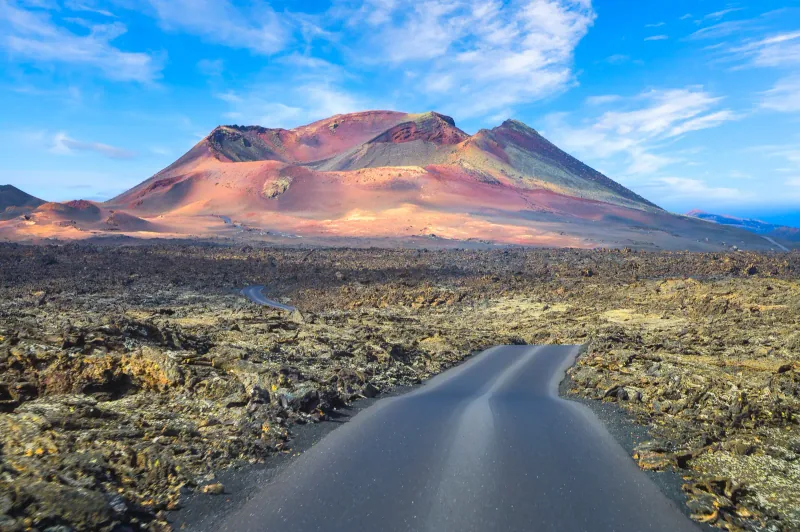
There are few places in the world where you can feel the earth still alive beneath your feet. Timanfaya is one of them. This national park, covering more than 50 km² of the southwest of Lanzarote, was born from the devastating eruptions that between 1730 and 1736 buried eleven villages under a blanket of lava. Nearly three centuries later, the landscape has barely changed: a desert of molten rock where life progresses with a geological slowness that invites reflection.
The Volcano Route: a journey to the center of the earth
The most spectacular way to explore Timanfaya is the Volcano Route, a 14 km bus circuit that winds between craters, seas of solidified lava, and geological formations that defy imagination. The colors range from absolute black to blood red, with ochres and violets that change with each hour of the day. Walking outside the designated areas is not allowed, and that is part of the magic: you observe an untouched landscape, exactly as the eruptions left it.
The geothermal demonstrations at Islote de Hilario
In the heart of the park, Islote de Hilario is the point where volcanic activity is most tangibly manifested. Just a few meters below the surface, the temperature reaches 600 °C. Guides insert dry bushes into ground holes, and they catch fire instantly. Water thrown into a pipe turns into a geyser that bursts forth with force. It's pure science turned into spectacle.
El Diablo: cooking with the earth's fire
Designed by César Manrique, the restaurant El Diablo is probably the most unique on the planet. Its kitchen uses natural geothermal heat — a grill over a volcanic cavity at 300 °C — to roast meats and fish. Dining here, with views of the sea of lava and the Atlantic in the background, is an experience that transcends the gastronomic.
Arrive at 9:00 sharp when the doors open to avoid queues of up to an hour. The restaurant El Diablo does not accept reservations, so plan to eat early. Parking is free, and the park entrance costs €12 per adult.
In Timanfaya, you don't visit a park: you enter the interior of a volcano that still breathes. It's the most palpable demonstration that Lanzarote is a living island.
For those seeking a more intimate experience, there are guided walking routes like the Ruta del Litoral or the Ruta de Termesana (with free prior reservation on the park's website), which allow you to walk on the lava with a guide who reveals the geological secrets of each formation. The combination of silence, lunar landscape, and the certainty that beneath your feet the earth is still burning makes Timanfaya an unforgettable visit.
LIVVO Tip: Go first thing in the morning to avoid queues at the entrance.
More to see in Lanzarote
Papagayo Beaches
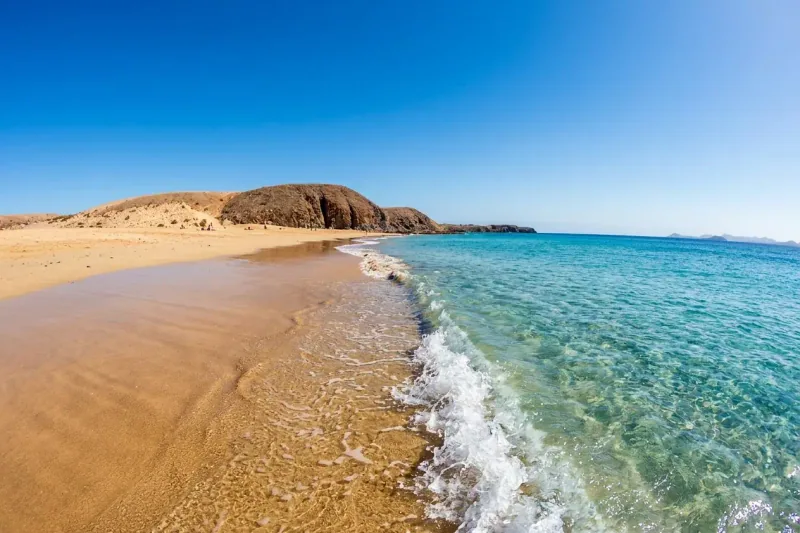
A cluster of pristine golden-sand coves with crystal-clear water in the south of the island, protected within the Monumento Natural de Los Ajaches. Playa Mujeres, Playa de la Cera and Playa de Papagayo are the best known. Calm waters ideal for snorkelling.
Jameos del Agua
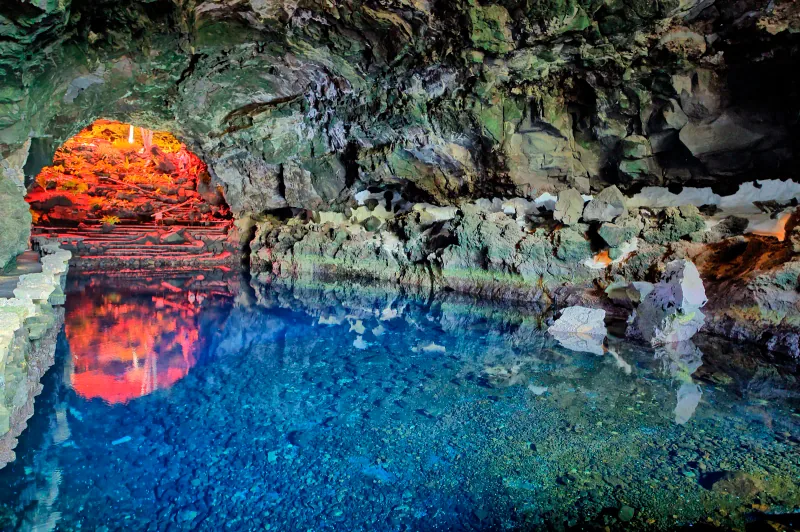
A unique space created by César Manrique inside a volcanic tunnel, where art and nature merge in a breathtaking setting. Highlights include its interior lake, the natural auditorium and the blind crab, an endemic species.

Surfing in Famara
With over 6 km of sand and consistent waves for much of the year, suitable for both beginners and advanced surfers. The dramatic backdrop of the Risco de Famara and the laid-back village nearby make it one of the most authentic spots on the island.
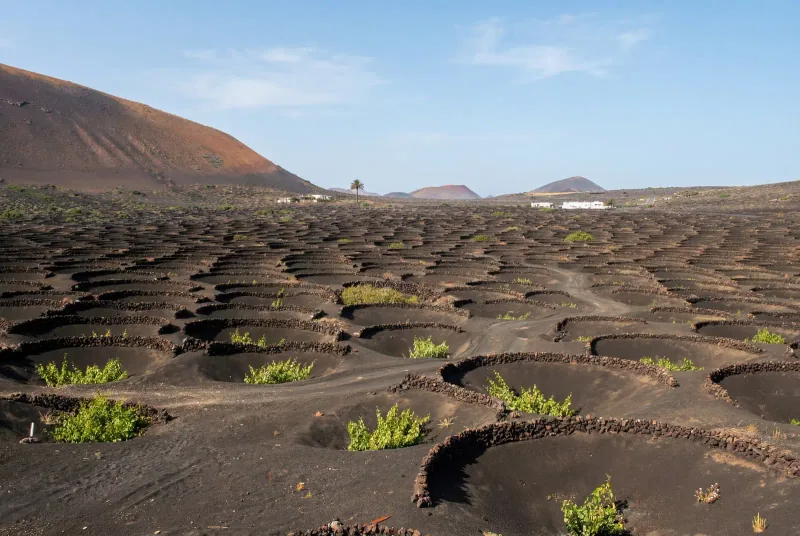
Viñedos de La Geria
A unique wine landscape in Lanzarote, where each malvasía vine grows in a volcanic ash pit. Local wineries offer tastings of volcanic wines with protected designation of origin.