
Corralejo Dunes
Fuerteventura
There are few places in Europe where you can walk through a desert of dunes and, just a few steps later, dip your feet into the Atlantic. The Natural Park of the Corralejo Dunes is one of them: seven kilometers of golden and white sand that the trade winds constantly shape, creating a changing landscape that is never exactly the same two days in a row.
A protected ecosystem by the sea
Declared a Natural Park in 1982, this dune system of 2,668 hectares is the largest in the Canary Islands. The dunes were formed from the erosion of shells and marine skeletons over millions of years, giving them that characteristic golden hue. Among the sand grow endemic species like the sea grape and the balancon, adapted to the salinity and constant wind.
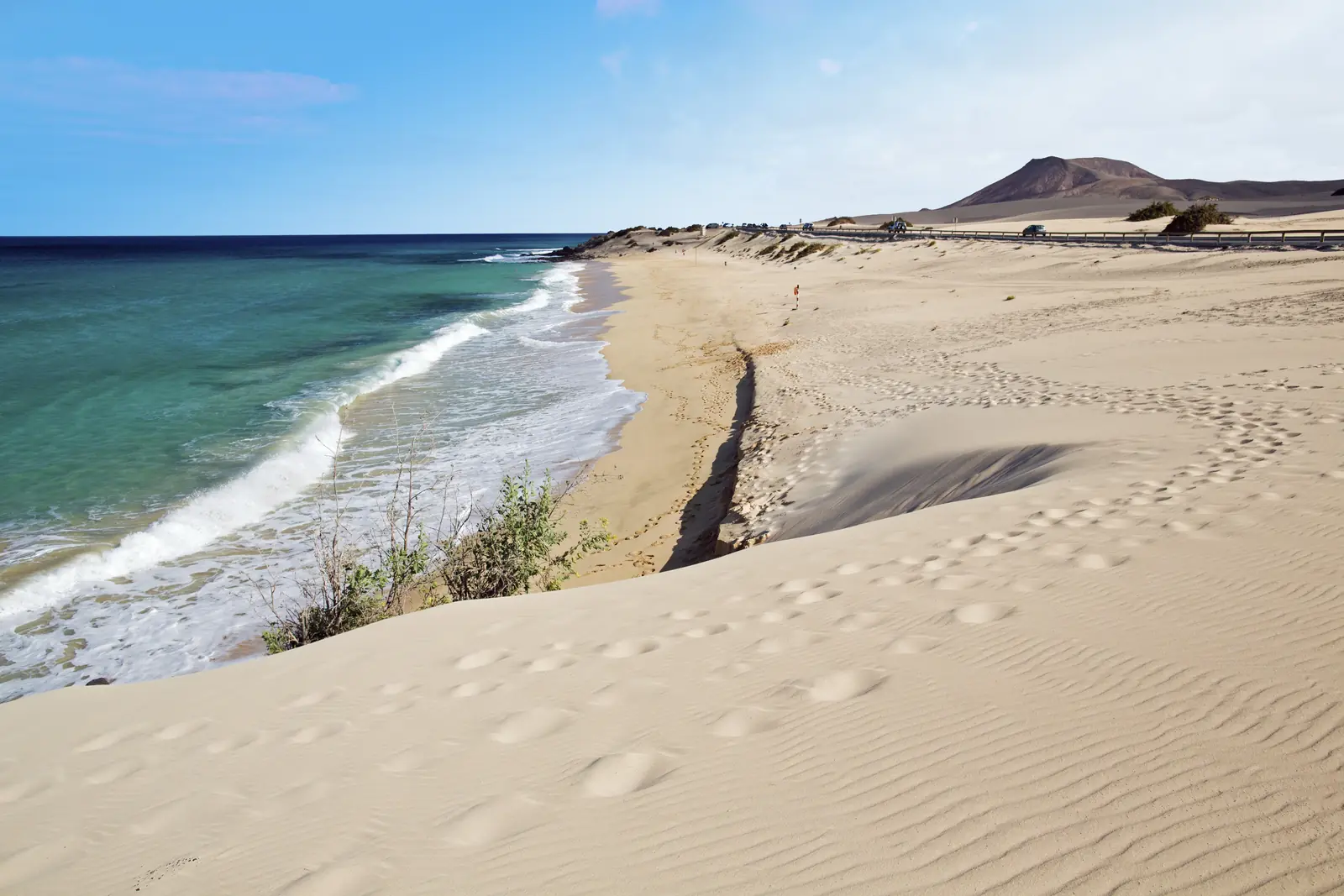
The FV-1 road crosses the park from north to south, and on both sides stretch fine sandy beaches with waters of an almost unreal turquoise. Those closest to Corralejo tend to have more people; the further south you walk, the more solitude you'll find. Some coves have barely any visitors, even in high season.
The island of Lobos on the horizon
From any point in the dunes, the silhouette of the island of Lobos floats on the horizon like a promise. The islet, just 2 km from the coast, completes a landscape that feels somewhat prehistoric: sand, wind, sea, and a silence broken only by the waves. At sunset, when the light tints the dunes orange and pink, you understand why this place was protected.
Arrive early in the morning to enjoy the beaches without wind. From midday onwards, the trade wind blows strongly. Bring sunscreen and water: there is no shade or services within the park. Bus stops on the FV-1 make access easy without a car.
The Corralejo dunes are proof that Fuerteventura is, above all, an island sculpted by wind and time.
LIVVO Tip: Walk south to find less crowded areas. The FV-1 road runs through the whole park.
More to see in Fuerteventura

Cofete Beach
At the southern tip, Cofete is a beach stretching over 12 km, framed by the Jandía mountains. Its remoteness and the unpaved access track are part of the experience.
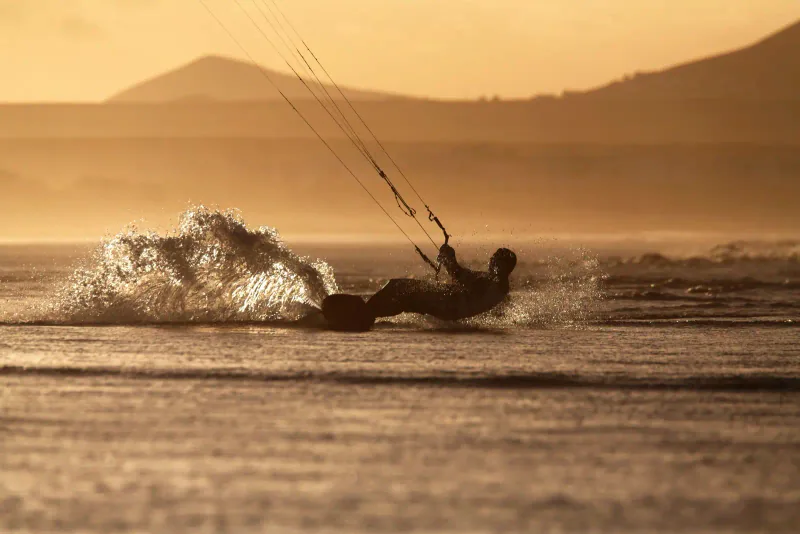
Windsurfing & Kitesurfing in Sotavento
On the Jandía Peninsula, Sotavento stands out for its tidal lagoons, which create wide areas of shallow water. Combined with the constant wind, this makes it one of Europe's top windsurfing and kitesurfing destinations.
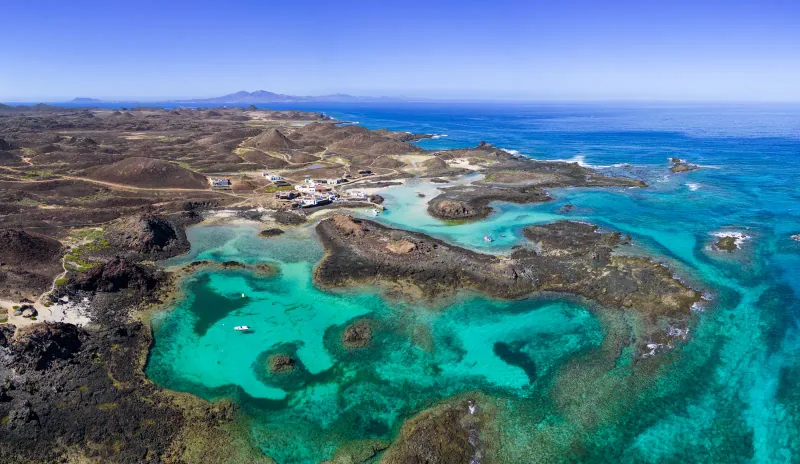
Isla de Lobos
Just minutes by boat from Corralejo, this protected islet offers volcanic trails, small coves and crystal-clear waters. It can be walked in a day, passing spots like La Concha beach and the Martiño lighthouse.

El Cotillo
On the west coast, El Cotillo combines open beaches with small natural lagoons sheltered from the waves. Its laid-back atmosphere and sunsets facing the ocean make it one of the most pleasant spots to end the day.